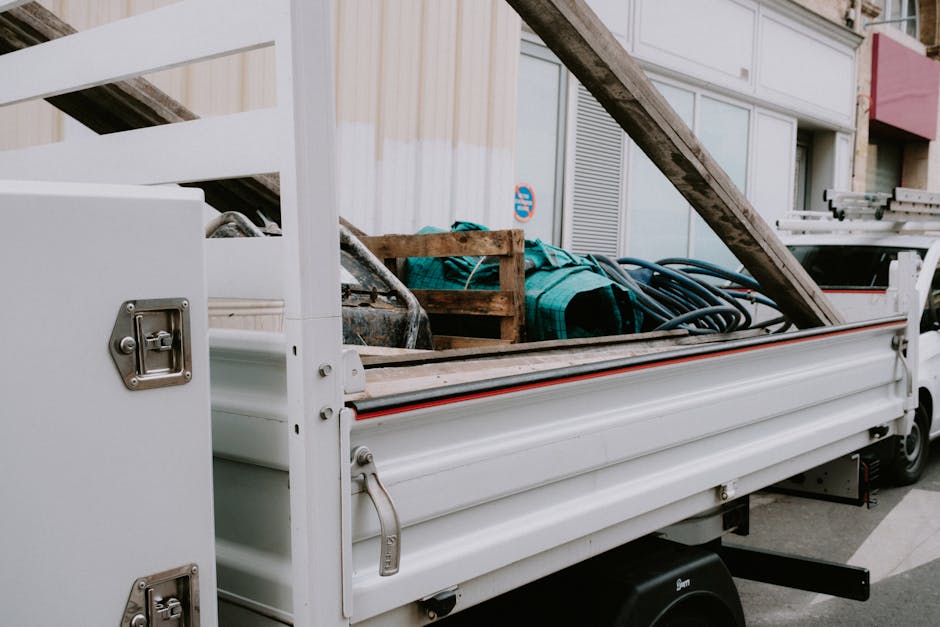
What to know before booking a Hayes junk removal team
If you are staring at a pile of old furniture, a packed garage, or a renovation mess that has just taken over the hallway, booking a junk removal team can feel like a relief and a risk at the same time. The relief is obvious. The risk is in the details: what they take, how they price, whether they are insured, and whether the job will be done neatly rather than half-finished. This guide on What to know before booking a Hayes junk removal team walks you through the practical stuff people often wish they had checked earlier, so you can book with a clear head and avoid awkward surprises.
Truth be told, most bad experiences are not dramatic. They are small annoyances that pile up: a van that cannot access the street, a quote that changes at the door, or waste that should have been sorted for recycling but wasn't. Let's make the process easier.
Table of Contents
- Why it matters
- How the process works
- Key benefits and practical advantages
- Who this is for and when it makes sense
- Step-by-step guidance
- Expert tips for better results
- Common mistakes to avoid
- Tools, resources and recommendations
- Law, compliance, standards, or best practice
- Options, methods, or comparison table
- Case study or real-world example
- Practical checklist
- Conclusion
- Frequently asked questions
Why What to know before booking a Hayes junk removal team Matters
Booking a waste clearance team sounds simple until you are the one arranging access, timing, pricing, and what happens to the waste after it leaves your property. In Hayes, as in much of west London, jobs can be affected by tight driveways, shared access, flats above shops, permit-only streets, and the usual London reality of limited parking. A team that understands those everyday constraints can save you a lot of hassle.
It also matters because "junk removal" covers a lot of ground. One company may be ideal for a single sofa and a few bags of clutter, while another is better for a full house clearance, a loft full of stored items, or builders waste clearance after a small refurbishment. If you match the job to the team properly, the whole thing feels calmer, quicker, and more predictable.
There is another reason this matters: trust. You are letting people into your home, garden, office, or rental property. That means you want more than a van and two willing arms. You want clear communication, sensible handling of belongings, and a disposal process that feels responsible, not careless. A little due diligence goes a long way.
Expert summary: The best booking decision is rarely the cheapest one on first glance. It is the one that gives you clear scope, fair pricing, proper access planning, and confidence that the waste will be handled responsibly.
How What to know before booking a Hayes junk removal team Works
Most junk removal bookings follow a fairly familiar pattern. You describe what needs removing, the team gives an estimate or quote, they arrive with the right vehicle and labour, and they load the items for transfer to reuse, recycling, or disposal. Simple in theory. In practice, the quality of the quote and the accuracy of your description make a huge difference.
For example, if you only say "a few bits of furniture" but the job actually includes a wardrobe, mattress, broken desk, and two heavy drawers, the team may need more time, more space in the van, or an updated price. That is not always a problem. It becomes a problem when nobody has spoken clearly beforehand.
Good teams usually want to know:
- the type of waste or items involved
- how much there is, roughly
- where the items are located
- any access issues, stairs, narrow paths, or parking limits
- whether anything is especially heavy, fragile, or awkward
- the preferred collection day and time window
This is where related services can help you think more clearly about the job. A loft full of old boxes may fit better with loft clearance, while a house with multiple rooms to clear may be better handled as house clearance. If you are dealing with business premises, business waste removal or office clearance may be more appropriate than a general one-off collection. That distinction matters more than people think.
Key Benefits and Practical Advantages
When the booking is done well, junk removal is one of those services that gives you an immediate lift. You see the space again. You can walk through the room without sidestepping a pile of things. You can use the garage, loft, spare room, or garden properly. Small win, but a real one.
Here are the benefits people usually notice first:
- Time saved: No multiple trips to the tip, no hiring a van, no wrestling with heavy items on your own.
- Less physical strain: Ideal if the waste includes awkward furniture, bulky bags, or broken appliances.
- Cleaner finish: A decent team leaves the area swept and tidy, not just emptied.
- Better sorting: Reuse and recycling opportunities are easier to handle when the team is set up to separate materials properly.
- Lower stress: You know who is coming, what they are taking, and roughly what the cost will be.
There is also a practical side for landlords, letting agents, small businesses, and busy households. A reliable clearance team can prevent clutter from becoming a longer-term problem. In a flat, for example, fast removal can make the difference between a smooth turnover and a messy delay. For furniture-heavy jobs, you may also want to look at furniture clearance or furniture disposal, depending on what needs to go.
And yes, it feels good. That sudden moment when the pile is gone and the room smells faintly of dust and fresh air rather than stale cardboard? Hard to beat, really.
Who This Is For and When It Makes Sense
This kind of service is useful for more people than you might expect. It is not just for dramatic full-house clearances or post-renovation chaos. Often, it is for everyday situations that have quietly become too much to manage alone.
You may want to book a Hayes junk removal team if you are:
- clearing a property after a move
- getting a rental ready for new tenants
- emptying a garage, loft, or shed
- replacing old furniture before new items arrive
- dealing with garden waste after a big tidy-up
- removing leftover materials after building work
- preparing an office for reorganisation or closure
- sorting out accumulated clutter in a home or flat
If your job is mainly outdoor debris, branches, soil, or hedge trimmings, garden clearance may be the more natural fit. For an overfull garage, garage clearance is often a better description of the job. These labels are not just marketing words; they help define scope, labour, and vehicle size.
It makes sense when the items are too much for your car, too heavy for one person, or too awkward to sort on your own. It also makes sense when you simply do not want to spend your weekend carrying mattresses down stairs. Understandable, honestly.
Step-by-Step Guidance
If you want the smoothest possible booking, keep the process simple and organised. A little preparation before you call often makes the whole experience faster and cheaper.
- List what needs removing. Walk through the space and make a rough note of every item or pile. Separate furniture, general household waste, garden debris, and building rubble if needed.
- Take a few clear photos. Photos help the team judge volume and access. One wide shot and a couple of close-ups are usually enough.
- Check access and parking. Ask yourself: can a van stop nearby, is there a narrow passage, are there stairs, or is there limited waiting space?
- Ask how pricing works. Some jobs are quoted on volume, some by item type, some by labour and loading time. If anything is unclear, ask before booking.
- Confirm what is excluded. Certain items may need special handling, and it is better to know that early than on the day.
- Book a realistic time slot. Morning slots can be helpful if the job is large, but the main thing is to allow enough time for access and loading.
- Prepare the area. Move small personal items, clear a path to the waste, and make sure anything you want to keep is obvious.
- Do a final walk-through. Before the van leaves, double-check the items taken and the space left behind.
If the job relates to a flat or shared building, you may want to review how the team handles access, lifts, stairs, and neighbour considerations. A flat clearance is often more sensitive than a ground-floor job because space is tight and access can be fiddly.
Small detail, big difference.
Expert Tips for Better Results
In our experience, the best jobs are the ones where the customer tells the truth about the mess. Not in a dramatic way, just plainly. "There are more bags than I first thought." "The wardrobe is heavier than it looks." "Parking is awkward after 3 pm." That sort of honesty helps everyone.
Here are a few tips that usually pay off:
- Be precise about volume. Saying "half a van" or "about three sofa loads" is often more useful than "a bit of rubbish."
- Separate what you want to keep. A labelled room or a taped-off corner can prevent mistakes.
- Group items by type. Furniture, wood, soil, broken household items, and office waste may be handled differently.
- Ask about recycling routes. A responsible team should be able to explain how they aim to divert suitable materials from landfill.
- Check payment expectations. Understand whether payment is due on arrival, completion, or by another method. That avoids awkwardness at the end of a busy day.
- Think about timing around neighbours. For flats or terraces, early morning is not always ideal. A later slot can be kinder if the job is noisy.
If you are also comparing providers on trust and professionalism, pages like about us and insurance and safety are worth a quick read. They can give you a clearer sense of how a company works and how seriously it takes customer protection. Not glamorous, but very useful.
A slightly boring checklist can save a very un-boring headache.
Common Mistakes to Avoid
Most booking problems come from a handful of familiar mistakes. Luckily, they are avoidable once you know what to look out for.
- Choosing on price alone. The cheapest quote can be fine, but if it excludes labour, access issues, or disposal fees, it may not be cheap for long.
- Underestimating the amount of waste. A job that looks small in a corner can fill a van faster than expected.
- Not mentioning difficult items. Fridges, mattresses, heavy wardrobes, or construction debris can change the job significantly.
- Forgetting about parking. In Hayes, parking matters. A lot. If the team cannot park close enough, loading takes longer.
- Leaving valuables mixed in with junk. It happens more often than people admit. Coins, paperwork, keys, chargers, photos. Check twice.
- Skipping the disposal question. You should know, at least broadly, whether items will be reused, recycled, or disposed of responsibly.
One more: don't assume every service handles every type of material in the same way. For example, household clutter, trade waste, and office items are different beasts. The right service title matters, and so does the right expectation.
Tools, Resources and Recommendations
You do not need specialist equipment to prepare for a junk removal booking, but a few simple tools help the process run smoothly.
- Phone camera: Take clear photos from doorway height and from the corners of the room.
- Measuring tape: Useful for bulky items, narrow stairs, or tight doorways.
- Marker tape or labels: Handy if you are separating keep, recycle, and remove piles.
- Notepad or notes app: Keep a quick list of what should go and what must stay.
- Access plan: Note gate codes, parking restrictions, or building entry instructions.
Useful website pages on the same site can also help you think through the booking. If your job is mainly around a property reset, home clearance may be relevant. For larger family property clear-outs, house clearance is often more appropriate. If your project involves renovating or redecorating, waste removal and builders waste clearance are useful comparison points.
For trust and customer experience, it is also worth checking the company's pricing and quotes information and its approach to recycling and sustainability. Those pages usually answer the questions people forget to ask on the phone.
Law, Compliance, Standards, or Best Practice
Waste collection is not just a logistical task; it also carries legal and practical responsibilities. In the UK, anyone handling waste should do so in a way that aligns with accepted duty-of-care principles, safe handling, and responsible disposal practices. You do not need to become a compliance expert to book a job, but it helps to understand the basics.
At a practical level, that means you should expect a reputable team to:
- handle waste responsibly and avoid fly-tipping
- consider recycling and reuse where feasible
- manage loading safely, especially for heavy or awkward items
- be clear about what types of waste they can and cannot take
- have appropriate insurance and working practices
If a job involves access risks, shared areas, or items that could cause injury during lifting, the team should be careful rather than rushed. Safe handling matters. So does communication. A service that seems vague about safety is usually a service to question.
For the customer, the best practice is straightforward: describe the waste honestly, avoid hiding anything sharp, heavy, or hazardous among general clutter, and keep the items you do not want removed clearly separate. That simple discipline makes the whole job safer for everyone involved.
You can also look at a company's stated commitments around health and safety policy and complaints procedure. Those pages are not exciting reading, admittedly, but they tell you a lot about how a business behaves when things do not go perfectly. And let's face it, that is when character shows.
Options, Methods, or Comparison Table
Before booking, it helps to compare the main ways people get rid of unwanted items. The right choice depends on volume, timing, effort, and how much sorting you want to do yourself.
| Method | Best for | Pros | Watch-outs |
|---|---|---|---|
| Professional junk removal | Bulky mixed items, fast clearances, awkward lifting | Quick, convenient, labour included | Needs clear scope and access details |
| DIY disposal | Small loads you can carry and transport yourself | Can be low cost if you already have transport | Time-consuming, physically demanding, multiple trips |
| Specialist clearance service | Full rooms, properties, offices, garages, lofts | Better for structured clear-outs and larger jobs | May require more planning and a fuller briefing |
| Furniture-specific disposal | Sofas, tables, wardrobes, beds | Good fit for item-heavy jobs | Some items may need different handling |
In plain English, if the job is awkward, bulky, or time-sensitive, professional removal often wins. If the load is tiny and you have the time, DIY can work. But once a job becomes messy enough to fill a weekend, most people decide their Saturday is worth more than that. Fair enough.
Case Study or Real-World Example
Picture a typical Hayes household clearing out a spare room before family visits. The room has an old bed frame, a broken chest of drawers, three bags of mixed household clutter, and a small stack of cardboard from recent deliveries. The first thought is often, "That's not too bad." Then you try to lift the drawers alone and realise it is more awkward than expected.
The homeowner takes a few photos, checks whether the van can park nearby, and explains that the room is on the first floor with a narrow landing. They also mention that one item has sharp exposed wood and another is heavier than it looks. The team arrives prepared, brings the right number of people, removes the items carefully, and leaves the room ready for a quick clean. No drama. No vague surprise fee. Just an easier day than the customer expected.
That is the pattern worth copying. Clear details lead to a smoother booking. It really is that simple, even if the actual lifting is not.
Practical Checklist
Use this checklist before you confirm the booking:
- Have you listed everything that needs removing?
- Have you taken photos of the items and the access route?
- Do you know whether parking is possible close to the property?
- Have you mentioned stairs, tight hallways, or narrow doors?
- Have you separated items you want to keep?
- Do you know whether the job is a general clearance, furniture clearance, garden clearance, or builders waste clearance?
- Have you asked how the price is calculated?
- Do you understand what is included in the quote?
- Have you confirmed the payment method and timing?
- Do you know where to find the company's trust, safety, and policy information if you need it later?
If you can tick most of those off, you are in good shape. Nothing fancy, just sensible preparation.
Conclusion
What to know before booking a Hayes junk removal team comes down to a few practical habits: be honest about the amount of waste, check access and parking, ask how the quote works, and make sure the service matches the actual job. That alone removes most of the stress. Once those basics are handled, the process is usually straightforward and pleasantly uneventful - which, for waste clearance, is exactly what you want.
When a booking is done properly, you get more than an empty space. You get breathing room, a cleaner start, and one less thing hanging over your head. And that can be a bigger win than it sounds on paper.
Get a free quote today and see how much you can save.
If you are ready to take the next step, a quick look at contact options and the company's payment and security information can help you book with confidence. A little clarity now makes the whole job feel lighter later.
Frequently Asked Questions
How do I know if I need a junk removal team or a specialist clearance service?
If you have a mixed load, bulky items, or several rooms to clear, a clearance service is usually the better fit. If it is just a small, simple load, junk removal may be enough. The deciding factor is usually volume and complexity, not just the number of items.
What should I tell the team before they arrive?
Tell them what you are removing, how much there is, whether anything is unusually heavy, and whether access is difficult. Photos help too. The more accurate the description, the less chance of surprise on the day.
Can a Hayes junk removal team take furniture?
Yes, often they can, especially if the items are part of a general clearance or a furniture-specific job. For sofas, wardrobes, beds, or mixed household furniture, pages like furniture clearance and furniture disposal are useful references.
What if I live in a flat with awkward access?
That is very common. Mention stairs, lifts, narrow corridors, or parking limits before booking. A flat clearance is often more about access planning than the items themselves.
How far in advance should I book?
That depends on how busy the team is and how urgent your job is. For simple jobs, short notice may be possible. For larger clearances or jobs tied to a move-out deadline, it is wiser to book earlier.
Will the team sort recycling for me?
Many reputable teams aim to separate recyclable or reusable material where practical. If this matters to you, ask how they approach recycling and sustainability before you confirm the booking.
What is the biggest mistake people make when booking?
Underestimating the job. People often forget how much room bulky items take once they are out of the corner and into the van. Photos and honest descriptions reduce that problem dramatically.
Do I need to prepare the items before collection?
Usually just enough to make access safe and clear. You do not normally need to move heavy items yourself, but you should remove personal belongings and make sure the team can reach the waste easily.
How do I compare quotes properly?
Compare what is included, not just the headline number. Look at labour, access assumptions, item types, timing, and any exclusions. A simple quote with clear terms is often better than a vague low price.
What should I check for trust and safety?
Look for clear policy information, sensible communication, and a transparent approach to handling waste. Pages such as insurance and safety, health and safety policy, and complaints procedure can be useful signals of how a company operates.
Can I book junk removal for an office or business premises?
Yes. Office clearance and business waste removal are useful options for commercial spaces, especially when desks, chairs, packaging, and archived clutter need to be removed efficiently.
What if I only need one or two awkward items removed?
That can still be worth booking, especially if the items are heavy, difficult to carry, or impossible to fit in your own vehicle. A single large item can be more hassle than a whole bag of smaller ones.
Is it worth checking the company's background before booking?
Absolutely. A quick look at the about us page, pricing and quotes, and recycling and sustainability information can help you judge whether the service feels straightforward and trustworthy. A few minutes of checking can save a lot of second-guessing later.
What if I am not sure how much waste I have?
That is normal. Take a few photos, give your best estimate, and mention anything that might affect loading. A good team will usually help you work it out without making it complicated. No need to overthink it.
If you want to learn more about the company behind the service, you can also review about us and the information on recycling and sustainability. Those pages often answer the questions people have after the initial quote, which is honestly the moment when many bookings become easier to trust.